CLOSE 

Written by Miyazawa Emerging Artist, Ethan Nylander
Do you think everyone experiences performance anxiety? I do. It’s easy to look at successful musicians who have confident stage presence and long lists of accolades and think they just don’t struggle with that. Perhaps people look at me, having won prizes in many competitions and two orchestral auditions, and say “Well, you must not get nervous!” No, the truth is, I’m terrified most of the time.
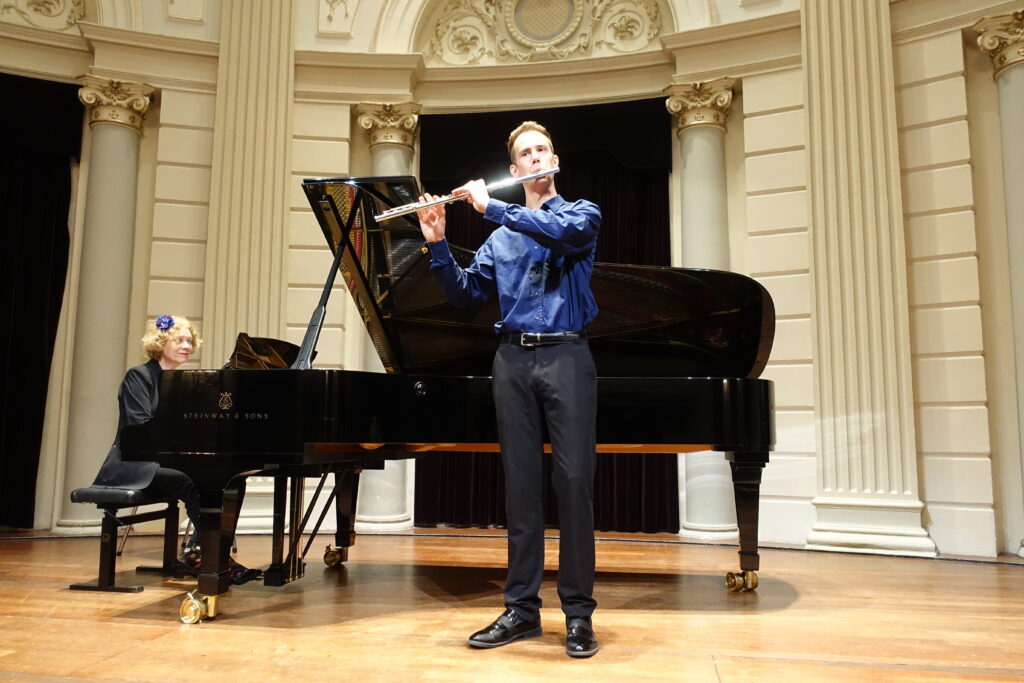
You probably know already that when we perform in front of an audience of people, the fear we feel is a biological trigger. Our survival instinct, the fight-or-flight response, is automatically instilled within all of us. But what can we do about it?
The obvious answer is that over time, the more you perform, the more accustomed you become to the situation and your body learns that you aren’t in any real danger. But there are some obstacles to this.
I’m going to tell you my journey with performance anxiety. Please remember that this is my experience, and you- and probably everyone else- is going to have their own.
When I began my bachelor’s degree at West Virginia University, I was performing all the time. We would have frequent flute showcase concerts, and through my flute quartet, I participated in many concerts and competitions. My performance anxiety was diminishing fast. But then: BOOM. Pandemic. For 6 months, I didn’t play in front of an audience other than my dog. When the time finally came, the anxiety was back, and in full force.
I think it was during this sort of post-pandemic middle ground where my anxiety actually worsened. I was so eager to perform, so desperate to train that skill, but performances came so seldom due to Covid precautions. I created a whole persona in my mind around the word “performance,” that despite my eagerness and excitement for it, it became a moment of extreme pressure in my own head.
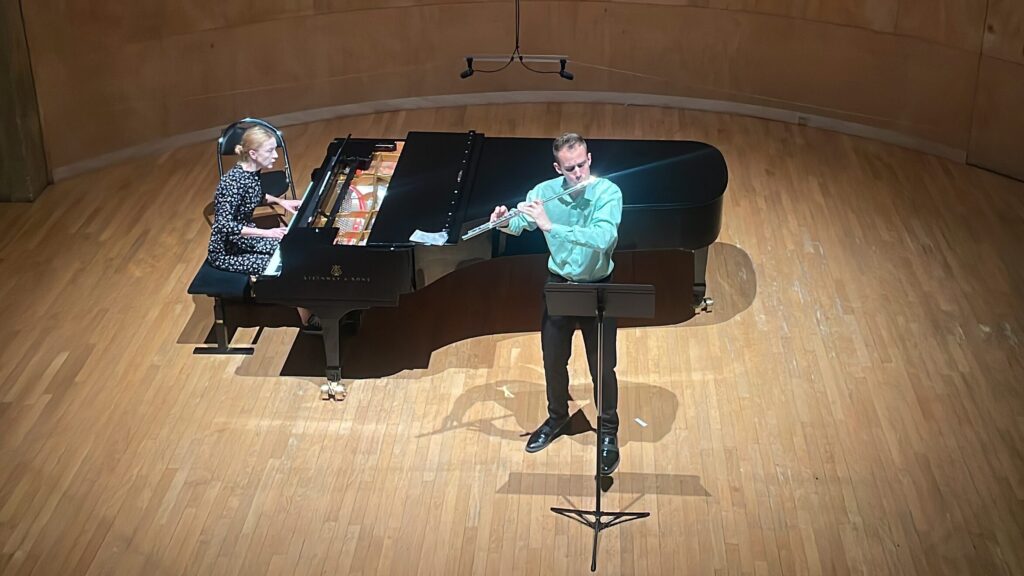
Because it was such a rare instance, I needed to use every opportunity to train my performance skills (I was a performance major after all), and in turn it developed into something I feared. When I realized this, I began to notice how simply saying the word “performance” to myself would trigger anxiety. So I started using other words, like “concert” or “play” for which I didn’t have that automatic reaction.
As the years went on however, my performance anxiety persisted. It was incredibly frustrating. I would train for countless hours, and could execute things effortlessly in the practice room, but on stage, things would happen that I could not even control. I would get this feeling like I have too much air in my lungs and somehow not enough. Sometimes my lips would shake. Sometimes my hands would get sweaty. My mouth would get dry and my sound would suffer. A couple times I had this strange out-of-body sensation like I was watching myself perform, or the sensation that I didn’t know how to hold my instrument anymore.
When I began my Fulbright year in Paris I felt myself under extreme pressure and experienced some of the worst performance anxiety of my life. This culminated in a performance where, playing from memory, my mind went completely blank and I forgot everything. That was the moment when I decided to get a prescription for beta blockers.
I used them regularly for performances for several months, but most of the time, I noticed no change at all. I tried to convince myself they were doing something, but I would have the same symptoms as usual.
Then I moved to Germany to study in Freiburg. At this point, I had access to more performance experience than any other time in my life. It was rough at first. I had some auditions where I felt like I completely embarrassed myself due to the anxiety. But the more auditions I took and the more I played in front of others, I began to get used to the situation.
At the end of my first year in Freiburg, I won first prize in the Dutch International Flute Competition, and a month later, I won an orchestral audition as academist in the Niederrheinische Sinfoniker. In these moments, I was still extremely nervous, but I was used to dealing with it.
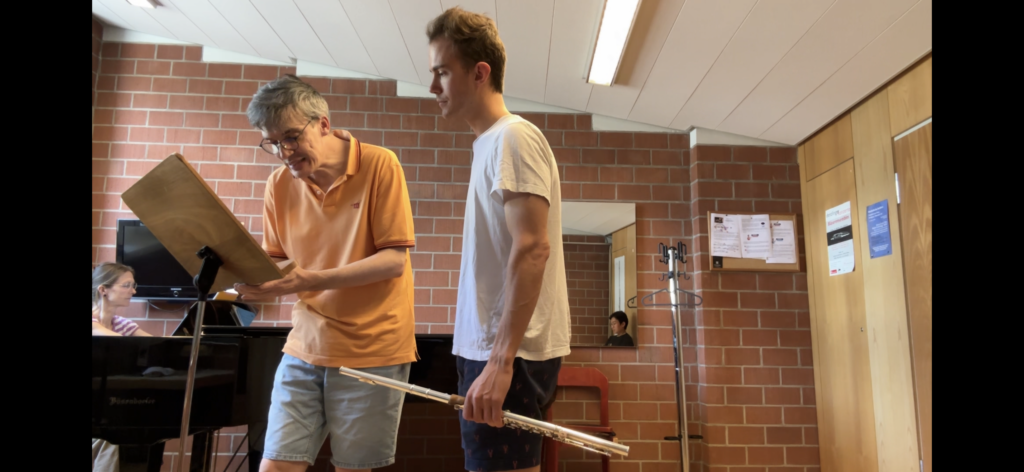
The final part of this story is when I won the audition for the permanent position of assistant principal flute in the Württembergische Philharmonie Reutlingen last November. This audition was the longest I have ever done, and very intense. But something happened which shifted my entire mindset around auditions.
What happened? I fell ill. On the train to Reutlingen I suddenly became sick to my stomach. I decided to go ahead and take the audition, despite not feeling well. I was much more worried about myself and my health than the actual audition. I needed to prioritize that; eating nutritional food and drinking lots of fluids before, and during the audition. Because of this, I was way less nervous than I thought I would be for an audition like that. And as you may know, I won the position.
This experience made me realize that when we are in performance mode- for an audition, competition, recital, anything- we are so invested into the moment that it feels like the most important thing in the world. That pressure that we create for ourselves feels impossible to escape. But when I was sick, I escaped, because other things remained important to me outside of the situation I was in.
Now I hope none of you ever experience getting sick for an audition or competition. But take from my story the advice to give yourself other things to prioritize. It’s ok to care about an audition. But make plans for yourself afterwards that you’re excited about- maybe going to a museum or seeing a movie. Maybe think about upcoming projects you have. If I was to take an audition tomorrow, in my warm-up time, instead of practicing the audition excerpts countless times over, I would actually use the time to practice as normal- perhaps the pieces I’m working on for an upcoming concert. Not only does it keep you warmed up on your instrument, but it’s a reminder that life continues after that audition.
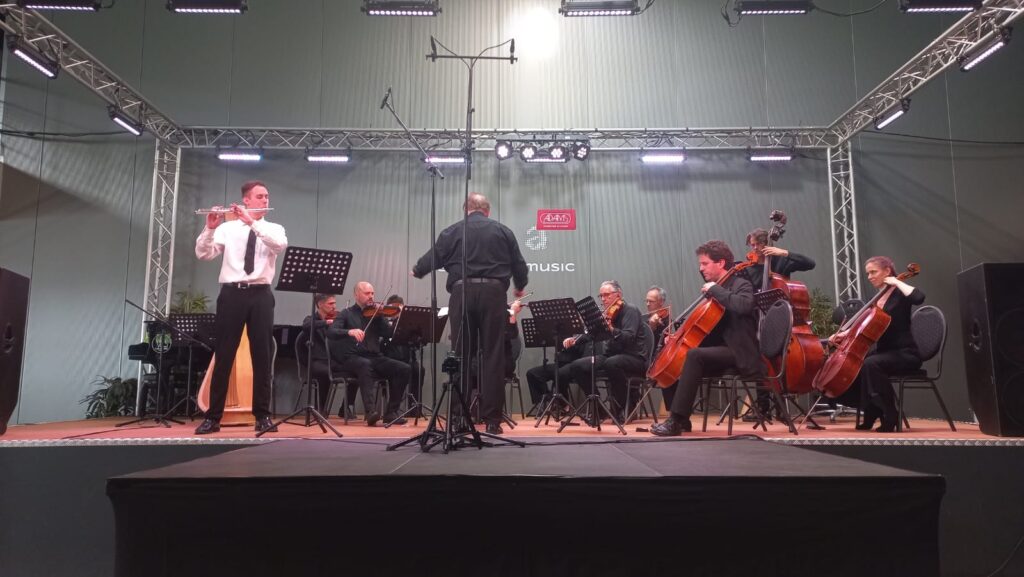
I want to add that I believe performance anxiety has become, for many of us who struggle with it, the very thing we really fear.
I imagine myself in a couple of months, playing in one of the most major flute competitions in the world, and what I fear is not what the jury will say to me. It’s not even being up on the stage that scares me. For me, I think it is the possibility that I will be so nervous that my throat gets dry, I feel like I have too much air, or I forget the notes.
But there is another technique I use that works wonders for me. Performance anxiety, as I have been discussing here, is a creation of our own minds. Yes it is a biological response, but the thoughts and worries we associate with it come from us. And the path to mental training is meditation. I’m huge on meditation. I use it in many ways, as it is a tool that we can use to work on our own minds. It’s like going to the gym but in your own head. I use it in my private life but also to work on performance anxiety.
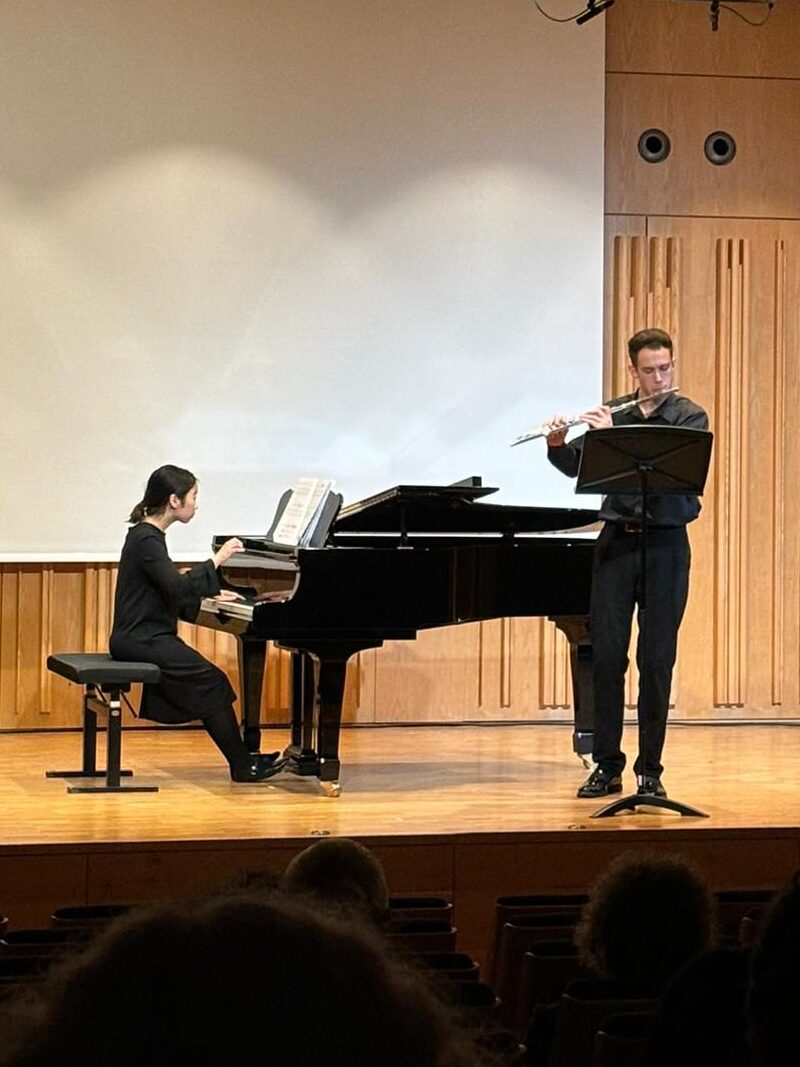
The first thing I would do to work on my performance anxiety is visualization. I visualize the environment; the final round of a competition, on stage with thousands of eyes on me and high stakes riding on this. It’s incredible how strong the imagination is. I have been able to replicate real feelings of anxiety doing this technique. It is a type of exposure therapy, and it works. You can do this technique in a silent dark room; you can do it in your practice room; you can even do it on the train to school or work. The second, and just as important meditation technique, is to accept your anxiety. When we fight our performance anxiety, it actually makes it worse, and our fear of the anxiety grows. In my meditation practice I go into a deeply relaxed state of mind and I tell myself very neutral thoughts like “I accept my anxiety.” “I welcome my anxiety.” “I know I will be anxious, and it’s okay.” This technique helps specifically with dissolving that fear of the anxiety itself.
I hope my story and my advice has spoken to you. Remember that your struggles with performance anxiety are completely human experiences. With the right training and perseverance, you can be the master of your own stage.
Just trust the process and be kind to yourself on this journey.
Ethan Nylander is a Miyazawa Emerging Artist and plays a Miyazawa Vision Model.
